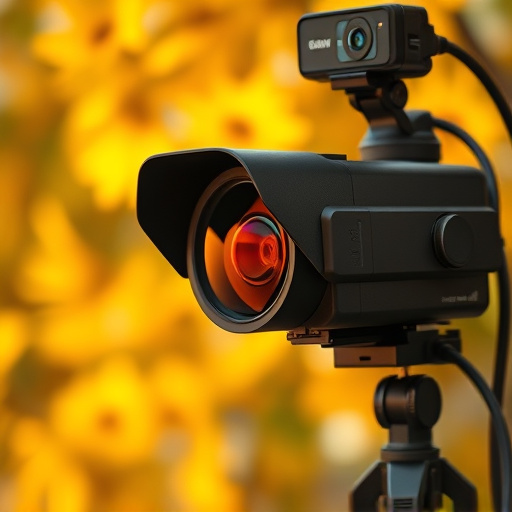
Hidden security cameras with audio capabilities have become increasingly sophisticated, mimicking everyday objects. Users can safeguard their privacy by staying vigilant and utilizing advanced smartphone apps that detect these devices through visual and audio cues. Tech advancements employ machine learning algorithms and multi-modal approaches to enhance identification accuracy. While these cameras offer security benefits, their clandestine use raises legal and ethical concerns, emphasizing the importance of understanding local privacy laws. Regular inspections and updated apps are crucial for protection in the digital age.
Uncover the subtle world of hidden security cameras with our comprehensive guide. In an era where privacy is paramount, understanding and detecting spy camera lenses has become a vital skill. This article delves into the various types of spy cameras and their disguises, empowering you to recognize potential threats. We explore innovative smartphone tools and apps designed for lens detection, coupled with advanced technologies that aid in positive identification. Additionally, legal considerations and privacy concerns are addressed, along with best practices for preventing and detecting hidden security cameras, including audio surveillance.
- Understanding Spy Camera Lenses: Types and Disguises
- Utilizing Smartphone Cameras for Detection: Tools and Apps
- Advanced Technologies in Spy Camera Lens Identification
- Legal Considerations and Privacy Concerns
- Best Practices for Preventing and Detecting Hidden Security Cameras with Audio
Understanding Spy Camera Lenses: Types and Disguises
Spy camera lenses, also known as hidden security cameras with audio capabilities, have evolved significantly in recent years. These devices are designed to capture footage and record sound discreetly, often disguised as everyday objects or accessories. Understanding the types of spy camera lenses available is crucial for recognizing potential hidden security cameras. Common disguises include fake smoke detectors, light bulbs, doorbells, and even pen drives. Each type has unique features, such as resolution, night vision capabilities, motion detection, and audio recording.
Recognizing these disguised cameras requires vigilance and knowledge. For instance, a seemingly innocuous smart smoke detector might have an invisible lens capable of capturing high-definition video and audio. Similarly, a regular-looking pen drive could be housing a miniature camera and microphone for covert surveillance. By being aware of these possibilities, users can take proactive measures to protect their privacy and security in today’s digital era.
Utilizing Smartphone Cameras for Detection: Tools and Apps
Smartphone cameras have become powerful tools in various fields, including security and surveillance. With just a few taps on your screen, you can now detect hidden security cameras, even those equipped with audio capabilities. There are numerous apps available that utilize your phone’s camera to identify potential hidden cameras, offering a convenient way to ensure privacy in public spaces or at home.
These apps work by analyzing visual patterns and anomalies that might indicate the presence of covert surveillance equipment. Some advanced applications can even detect infrared signals, which are commonly used in hidden security cameras. By combining camera vision with audio processing algorithms, these tools provide users with a comprehensive solution to uncover invisible threats, ensuring peace of mind in an era where privacy concerns are on the rise.
Advanced Technologies in Spy Camera Lens Identification
With advancements in technology, detecting hidden security cameras, including those with audio capabilities, has become a sophisticated process. Modern techniques leverage advanced image and sound analysis to identify peculiarities that might indicate the presence of spy cameras. Machine learning algorithms are trained on vast datasets, enabling them to recognize subtle patterns often missed by the human eye. These patterns can include unusual lens shapes, pixel arrangements, or even faint audio signals that reveal the camera’s activity.
One innovative approach involves utilizing computer vision and signal processing to scan environments for suspicious artifacts. By analyzing visual data in real-time, these systems can detect hidden lenses embedded in everyday objects or electronic devices. Additionally, combining visual cues with auditory feedback from hidden microphones enhances the accuracy of identification. This multi-modal approach ensures that even sophisticated, well-hidden security cameras with audio capabilities cannot operate undetected.
Legal Considerations and Privacy Concerns
In the age of advanced technology, the detection and identification of hidden security cameras, including those with audio capabilities, have become a growing concern for privacy advocates and legal experts alike. While the use of spy cameras offers legitimate security benefits, their clandestine nature raises significant legal and ethical questions. Many countries have stringent laws in place to protect individual privacy, making it illegal to install Hidden Security Cameras With Audio without explicit consent. These regulations are designed to safeguard citizens from unwarranted surveillance, ensuring their right to privacy is respected.
The detection process involves utilizing specialized apps on smartphones that can analyze visual cues and patterns to identify potential hidden cameras. However, it’s crucial for users to be aware of the legal implications. Unauthorized access or recording through such devices can lead to severe consequences, including civil lawsuits and criminal charges. Therefore, it’s essential to approach this technology with a deep understanding of local privacy laws and ethical considerations to avoid infringing on others’ rights while safeguarding one’s own privacy.
Best Practices for Preventing and Detecting Hidden Security Cameras with Audio
Preventing and detecting hidden security cameras, especially those equipped with audio capabilities, is a growing concern in today’s digital age. One of the best practices to mitigate this risk is to stay informed and vigilant about potential hidden devices. Regularly inspect spaces you frequent, such as homes, offices, or public areas, for any unusual objects or attachments on walls or ceilings. Look out for signs of tampering, like cracks or markings that might indicate the presence of a spy camera lens.
Another effective strategy is to use advanced smartphone applications designed for this purpose. These apps can help you detect hidden cameras by analyzing audio patterns and visual anomalies. By utilizing built-in microphones and cameras, they can identify suspicious devices emitting unusual sound signatures or capturing irregular visuals. Regularly updating these apps ensures access to the latest detection techniques and technologies aimed at thwarting hidden security cameras with audio capabilities.
In today’s digital age, being aware of hidden security cameras with audio is crucial for safeguarding privacy. By understanding various spy camera lens types and their disguises, you can empower yourself using smartphone tools and apps specifically designed for detection. Advanced technologies offer enhanced identification methods, but legal considerations must be addressed to ensure ethical practices. Following best practices, including regular checks and proactive measures, can help prevent and detect these hidden devices, ensuring a safer digital environment.